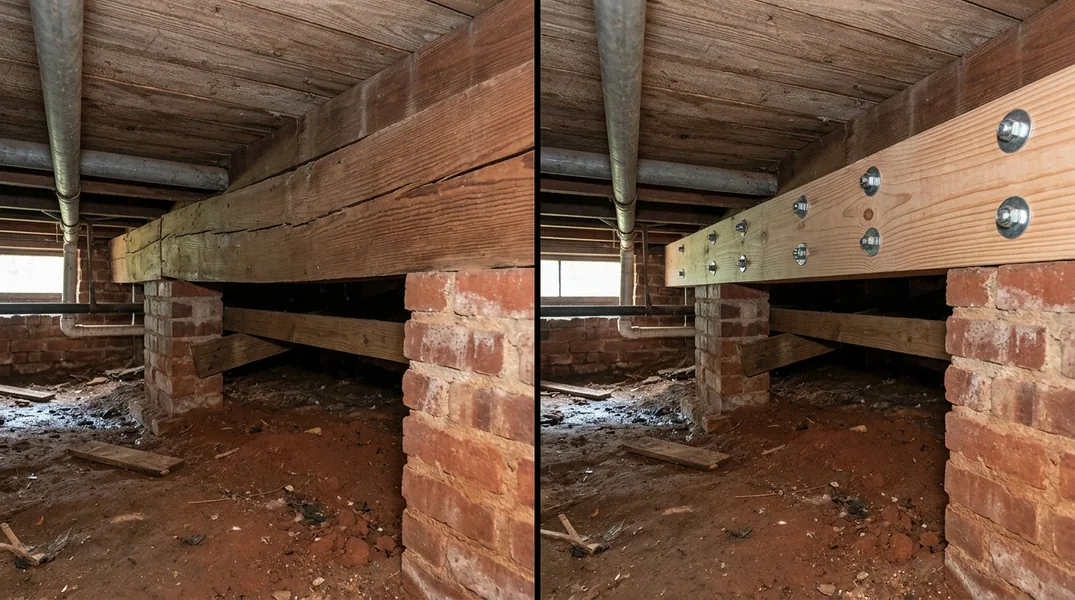
Why Is My Floor Sagging? Common Causes in Older Greensboro Homes
If you own one of Greensboro's charming older bungalows, you may have noticed your floors aren't quite level anymore. That subtle slope or bounce underfoot isn't just an inconvenience, it's a warning sign that something structural needs attention. Sagging floors develop over decades, and understanding the root cause is the first step toward fixing them properly.
The most common culprit behind sagging floors in older homes is Wood Rot & Dry Rot Repair issues in the floor joists and support beams beneath your home. When wood absorbs moisture from crawl spaces, basements, or poor drainage around the foundation, it begins to soften and lose its structural integrity. Over time, the affected wood compresses under the weight of the house, causing the floor above to sag. This process can take years, but by the time you notice the problem, significant damage has already occurred.
Termite Damage Repair is another frequent reason for floor failure in older Greensboro properties. Termites tunnel through floor joists and beams, hollowing out the wood while leaving the surface intact. A floor can appear solid but be severely compromised inside, until it finally gives way under normal foot traffic. Additionally, undersized or deteriorating beams, inadequate support posts, or failed foundation settling can all contribute to that unsettling dip in your living room or bedroom.
Understanding Floor Joist Repair and Sistering Floor Joists
When your floor joists are damaged but not completely destroyed, repair options exist that can restore structural soundness without requiring a full replacement. Floor Joist & Subfloor Repair specialists often use a technique called sistering floor joists, which involves fastening a new, sound joist alongside the damaged one. This reinforcement method transfers the load from the weakened joist to the new sister joist, effectively doubling the support in that area.
Sistering floor joists is an economical solution when rot or minor termite damage hasn't compromised more than 30 to 40 percent of the joist's depth or width. The process requires careful measurement and alignment to ensure the sister joist sits flush against the existing joist and is properly secured with bolts or lag screws spaced appropriately along its length. In many cases, this repair can be completed without removing the flooring above, though access from the crawl space or basement is essential.
However, sistering isn't always the right answer. If the damage is extensive, if multiple joists are affected, or if the underlying cause (moisture or termites) hasn't been addressed, a more comprehensive repair strategy is needed. This is where professional assessment becomes critical. A thorough inspection will reveal whether sistering will solve your problem or if more extensive Beam Replacement & Load-Bearing Wall Removal work is required to restore your home's structural integrity.
Sagging Floor Repair: When You Need Professional Help
Diagnosing and repairing a sagging floor is not a DIY project for most homeowners. The structural systems supporting your home are complex, and mistakes can lead to catastrophic failure or create liability issues. A professional carpenter or structural engineer needs to evaluate the extent of the damage, identify the root cause, and design a repair strategy that addresses both the symptom and the underlying problem.
During a professional inspection, a qualified technician will examine the floor joists, beams, support posts, and foundation for signs of rot, termite activity, settling, or other damage. They'll check moisture levels in the crawl space or basement, assess the adequacy of existing supports, and determine whether the sagging is localized or affects a larger area. This comprehensive evaluation is essential because fixing only the obvious problem while ignoring moisture or pest issues will result in the same problem recurring within a few years.
Once the cause is identified, your repair plan might include removing damaged wood, installing new joists or beams, adding support posts, improving drainage, treating moisture issues, or addressing pest damage. Each step must be executed in the correct sequence and to building code standards. If you're experiencing noticeable floor sag in your home, the best first step is to contact a qualified professional for an evaluation and free estimate.
Sagging Floor Repair Cost in Greensboro: What to Budget
The cost of repairing a sagging floor varies dramatically depending on the extent of damage, the size of the affected area, and the complexity of the repair required. Simple sistering of one or two joists might cost between $1,500 and $3,500, while more extensive repairs involving multiple joists, beam replacement, or foundation work can easily exceed $10,000 or more. Understanding what factors influence pricing will help you prepare financially and avoid sticker shock when you receive quotes.
The primary cost drivers in sagging floor repair include the number of joists that need attention, the accessibility of the damaged area, whether the subfloor needs replacement, the cost of materials, and the labor hours required. If your crawl space is tight and cramped, labor costs will be higher because the work takes longer. If the damage extends into the subfloor or if you need to address moisture control or pest treatment simultaneously, those services add to the total bill. Additionally, if structural damage is severe enough to require Beam Replacement & Load-Bearing Wall Removal work, costs can climb significantly.
Don't let high repair costs tempt you to delay treatment. A sagging floor that worsens over time becomes exponentially more expensive to fix. What might cost $5,000 to address today could require $15,000 in repairs five years from now if the underlying moisture problem continues unchecked. Getting an accurate estimate requires a professional inspection. Greensboro Carpentry offers free evaluations and transparent pricing so you know exactly what to expect. Call (336) 203-7049 to schedule your assessment today.
Moisture Control and Prevention: Stopping Future Sagging
Fixing a sagging floor is only half the battle. If you don't address the moisture problem that caused the damage in the first place, your repair will fail and the sagging will return. This is why professional floor repair always includes an assessment of crawl space conditions, foundation drainage, and ventilation. Common moisture sources include poor grading that directs water toward the foundation, missing or damaged gutters, inadequate crawl space ventilation, plumbing leaks, and high groundwater tables.
Preventing future wood rot and floor damage requires a multi-layered approach. Ensure that gutters and downspouts direct water at least 6 feet away from your home's foundation. Grade the soil around your home so water slopes away rather than pools near the house. Install or improve crawl space ventilation and consider adding a vapor barrier if your crawl space is consistently damp. Fix any plumbing leaks promptly, and monitor humidity levels in basements and crawl spaces. In some cases, installing a sump pump or improving foundation drainage may be necessary, especially if your Greensboro home sits in a low-lying area or has a history of moisture problems.
Regular inspections are your best defense against future sagging. Once every few years, have a professional examine your crawl space or basement for signs of new moisture intrusion, wood damage, or pest activity. Catching problems early, when they're small and inexpensive to address, is far better than discovering major structural failure years later. If you'd like to schedule a moisture assessment or discuss prevention strategies for your home, reach out to Greensboro Carpentry at (336) 203-7049.
Next Steps: Getting Your Sagging Floor Evaluated
If you've noticed your floors sagging, sloping, or bouncing, don't ignore the problem. Contact a qualified structural repair professional as soon as possible to determine what's causing the issue and what options are available to fix it. The longer you wait, the more extensive and expensive the repair becomes, and the greater the risk to your home's safety and structural integrity.
Greensboro Carpentry specializes in sagging floor repair, floor joist restoration, and all aspects of structural wood repair for older homes throughout Greensboro. Our team has decades of combined experience diagnosing and fixing foundation and floor problems in vintage bungalows and historic homes. We provide thorough inspections, honest assessments, and transparent estimates so you understand exactly what needs to be done and what it will cost. Call us today at (336) 203-7049 or visit our website to request your free estimate. Let us help you restore your home's structural soundness and peace of mind.
Looking for a professional carpentry contractor in Greensboro? Greensboro Carpentry responds fast for all your carpentry needs.
Get a Free QuoteOur services: Wood Rot & Dry Rot Repair · Termite Damage Repair · Floor Joist & Subfloor Repair