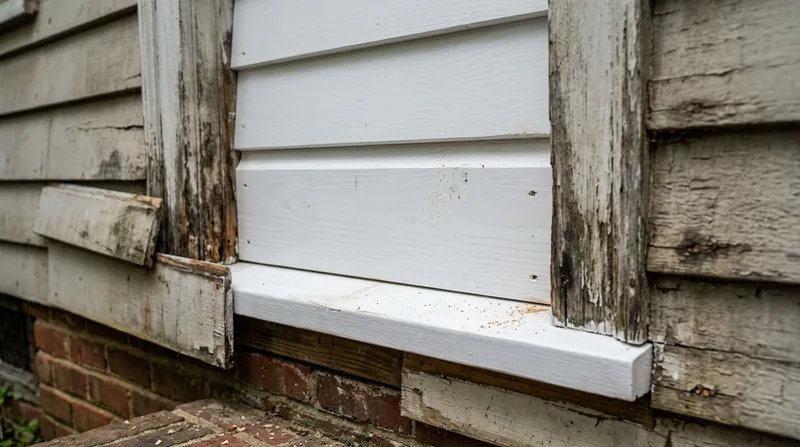




Greensboro's humid Piedmont climate and dense red clay create ideal conditions for wood rot to take hold in residential framing and trim. The city's historic bungalows, Colonial Revival homes, and postwar brick ranches all face the same moisture challenge: water sits against sills, fascia, and exterior trim longer than drier climates allow, and decay follows. Wood Rot & Dry Rot Repair in Greensboro means cutting out the soft wood, treating sound framing with preservative, and rebuilding with rot-resistant lumber. We don't replace sound wood, and we don't dramatize what decay does. We explain it, show you what's salvageable, and give you an honest repair plan. Whether it's a sill plate under a Fisher Park bungalow or a joist under a Sunset Hills ranch, the work is the same: remove what's gone, keep what's solid, and rebuild right.
Why Wood Rot Matters in Greensboro's Humid Climate
Greensboro sits on the North Carolina Piedmont with iron-rich red clay that drains poorly around foundations and holds moisture against wood for months. The humid subtropical summers, combined with occasional winter ice storms that load the canopy and direct water into gutters and trim, create relentless moisture exposure. Original heart-pine trim, sill plates, and exterior casing in homes built between 1900 and 1970 absorb that moisture and begin to soften. Decay doesn't announce itself loudly. It starts as discoloration, becomes spongy to the touch, and spreads along the grain if left untreated. The longer it sits, the more framing it reaches and the costlier the repair becomes.
- Sill plates and rim joists decay first because they sit closest to grade and moisture migration.
- Exterior trim, fascia, and soffit fail when gutters overflow or downspouts drain too close to the wall.
- Floor joists and subfloors can soften if a crawlspace or basement stays damp or if plumbing leaks go unnoticed.
- Interior trim and door jambs decay when exterior moisture penetrates the wall cavity and condenses on cold surfaces.
Early intervention stops decay from spreading to load-bearing members and keeps repair costs manageable.
Key info: Greensboro's first suburbs like Fisher Park and Old Irving Park were built with solid-wood sills and trim that have survived a century by staying dry. Once moisture gets in, decay accelerates. We catch it early by inspecting sills, trim, and joist ends at the first sign of soft wood or discoloration.
For more on structural damage from moisture, see our page on Floor Joist & Subfloor Repair.
How We Repair Wood Rot in Greensboro: Our Process
We start with a site visit to identify all affected wood, probe soft areas with a screwdriver or awl, and assess how far decay has traveled through the framing. Sound wood gets treated with a water-borne preservative. Decayed wood gets cut out cleanly and replaced with pressure-treated lumber, Douglas fir, or redwood depending on the location and exposure. For trim and siding, we match species and grain where the wood will be visible. For hidden framing like joists and sill plates, we prioritize durability over aesthetics. Every repair gets sealed and painted to shed future moisture.
- We probe the full depth and width of suspected decay to determine how much wood must be removed.
- We cut sound wood square and clean, leaving no soft fibers at the repair boundary.
- We apply preservative to all exposed framing and let it dry before closing the wall or trim.
- We sister new framing members to existing joists or replace sill plates in sections, securing them with galvanized bolts or fasteners.
- We finish with paint or stain and seal all end grain to prevent water reentry.
The goal is to return the wood to its original function and durability, not to replace sound material or add cost where repair is sufficient.
Example: A Kernersville homeowner noticed soft wood at the base of a wraparound porch. We cut out 18 inches of decayed sill plate, sistered a new pressure-treated member alongside the existing joist, and sealed the exterior trim. The repair cost less than half a full replacement and the porch stands solid.
Learn more about structural carpentry and framing solutions at our Framing & Structural Carpentry page.
Wood Rot Repair Methods: Repair vs. Replace
| Approach | Description | Best for |
|---|---|---|
| Localized cut and sister | Remove decayed section, cut sound wood square, attach new pressure-treated or rot-resistant lumber alongside with bolts or fasteners. | Floor joists, sill plates, beam ends where decay is confined to 2 to 4 feet of length. |
| Full member replacement | Remove the entire joist, sill plate, or beam and install new lumber of matching dimension and grade, secured with fasteners and shims as needed. | When decay spans more than half the member length or when sistering would reduce headroom or create an awkward transition. |
| Trim and siding replacement | Remove decayed fascia, soffit, or exterior casing and install new material in matching species or a durable alternative, sealed and painted. | Exterior trim, window and door casings, fascia boards where moisture exposure is high and rot is surface-visible. |
| Preservative treatment and monitoring | Apply water-borne preservative to sound wood showing early discoloration, improve drainage and ventilation, and schedule follow-up inspection in 12 months. | Early-stage decay where wood is still firm, moisture source can be controlled, and the owner wants to avoid immediate replacement. |
Wood Rot & Dry Rot Repair Cost in Greensboro: What to Expect
Wood rot repair in Greensboro typically starts at $650 for a small, localized repair to an exterior trim board or sill plate. A larger job involving sistering a joist or replacing a section of rim board runs $1,500 to $3,500 depending on access, lumber species, and whether the work is hidden or exposed. Full member replacement or repairs that extend across multiple joists or into load-bearing sill plates can exceed $5,000 and often require a permit from the Greensboro Building Department. The cost factors that move an estimate up are straightforward: the amount of decayed wood, the depth of the repair into the wall or crawlspace, whether the repair is structural or cosmetic, and the lumber grade required for durability.
Getting two or three estimates gives you confidence in the scope and price. Each carpenter will assess decay differently, and a second opinion often clarifies what truly needs replacement versus what can be repaired. Travel is included across Greensboro and surrounding areas, and we provide a free estimate with a response within 24 hours. For a detailed breakdown of pricing across all our services, visit our full pricing overview.
What to Look for When Hiring a Carpenter Near Greensboro for Wood Rot Repair
A good carpenter explains what's decayed and why, shows you the soft wood, and proposes repair before replacement. Ask whether they've worked on homes in your neighborhood or era. Fisher Park bungalows, Old Irving Park estates, and postwar ranches all have different framing and trim standards, and experience with your home's type matters. Request references from recent wood rot or structural repairs, not just a general list. Check that your carpenter is fully insured and that coverage includes liability and workers compensation. If your repair involves a structural member like a joist or load-bearing sill, confirm whether a permit is required by contacting the Greensboro Building Department directly. Some HOAs in neighborhoods like Starmount Forest or Guilford Hills have design review requirements for exterior work, so verify that before you book.
- Ask the carpenter to show you the decay with a probe or screwdriver and explain why that section must be cut out.
- Request an itemized estimate that separates material cost, labor, and any permits or inspections needed.
- Verify that the carpenter carries liability insurance and can provide a certificate of insurance on request.
- Check with your city or HOA to confirm whether your repair requires a permit or design approval before work begins.
- Get a timeline in writing and clarify whether the job is one day or multiple visits.
For a free estimate and to discuss your specific repair, contact us or call (336) 203-7049.
Wood Rot & Dry Rot Repair in Greensboro: Pricing Guide
| Service | Price | Details |
|---|---|---|
| Small trim or fascia repair | Starting at $650 | Localized exterior trim or siding repair, single board or small section, includes removal, material, and finish paint |
| Sill plate or rim joist repair | Starting at $1,500 | Localized sistering or section replacement of sill plate or rim joist, access and lumber species determine final cost |
| Floor joist or structural member repair | Starting at $2,200 | Sistering or replacement of floor joist, beam end, or load-bearing trim, often requires permit and inspection |
| Multi-joist or full member replacement | On estimate | Extensive decay across multiple joists, full sill plate replacement, or repairs involving load-bearing alterations require site assessment |
| Travel and estimate | Included and Free | No mileage fee in Greensboro and surrounding areas, free estimate with 24-hour response, no obligation to book |
Indicative pricing, the exact cost depends on square footage, finish, and site access. Free personalized estimate within 24h at (336) 203-7049.


