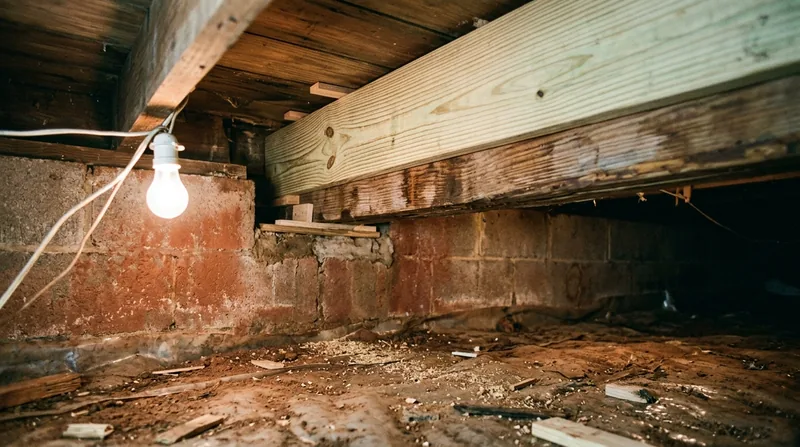




Floor Joist & Subfloor Repair in Greensboro addresses one of the most common structural complaints in the Piedmont: sagging, bouncy floors that develop over decades of humidity cycling through crawl spaces. Greensboro's brick ranches in Sunset Hills and Guilford Hills, along with the older bungalows and Colonial Revival homes scattered across Fisher Park and Aycock, all sit on wood-frame floors vulnerable to moisture. The region's dense red clay drains poorly around foundations, and the hot, humid summers combined with occasional freeze-thaw cycles create ideal conditions for wood to absorb and release moisture repeatedly. This movement weakens joists and subfloor sheathing, causing visible sag, floor bounce, and sometimes cracked plaster or gapping trim on the stories above. We sister compromised joists, replace rotted sections of subfloor, and level floors before finishes go back down. The work is structural and often requires a permit from the Greensboro Building Department, but it stops the damage and restores the floor to solid footing.
Why Floor Joist and Subfloor Failure Matters in Greensboro Homes
Floor joists carry the weight of everything above them: people, furniture, walls, and the floor itself. When joists weaken from moisture, the floor loses stiffness and begins to sag. In older bungalows around Glenwood and Westerwood, this often shows up as a noticeable dip in the middle of a room or a floor that feels soft underfoot. In postwar ranches across Starmount Forest and Guilford Hills, the same humidity that caused the original sag decades ago may have also introduced dry rot or early decay, especially if a plumbing leak or roof leak went unaddressed. Subfloor sheathing (the layer of boards or plywood nailed to the top of the joists) can rot, splinter, or separate, allowing floor finishes to move or creak. Ignoring these problems does not make them go away; the wood continues to weaken, and the cost of repair grows as more material must be replaced.
- Sagging joists reduce floor stiffness and cause visible dips or uneven surfaces that worsen over time.
- Moisture-damaged subfloor sheathing develops soft spots, squeaks, and movement that damages finish flooring and trim.
- Untreated decay in joists or sill plates can eventually compromise the load path and require replacement rather than repair.
- Floor movement can crack plaster walls, gap baseboards, and cause doors and windows to stick or misalign.
Addressing floor joist and subfloor problems early keeps the structure sound and prevents cascading damage to finishes and the walls above.
Key info: A 1950s ranch in Guilford Hills with soft spots under the kitchen might need only localized subfloor patching, while a 1920s bungalow in Fisher Park with widespread joist sag may require sistering (reinforcing joists with new lumber alongside the old) across an entire bay. An on-site inspection determines the scope and cost.
For official guidance on permits and structural requirements, consult the Greensboro Development Services or your local building department.
How We Repair Floor Joists and Subfloor in Greensboro
Our process starts with a thorough crawl space inspection to map the damage, identify the cause (moisture, old leaks, settling, or decay), and determine whether the wood can be reinforced or must be replaced. We photograph the condition, measure sag, and test wood strength to decide between sistering and full replacement. Once the scope is clear, we obtain any required permits from the Greensboro Building Department, set up temporary support posts if needed to stabilize the floor above, and begin the repair. We always work to preserve sound wood and restore structural integrity without unnecessary replacement. After repair, we level the floor, re-nail any loose subfloor, and prepare the surface for new finish flooring or refinishing. The entire process is documented so you can help file a claim with your insurance if applicable. See our wood rot repair page for more detail on decay assessment and repair methods.
- We inspect the crawl space to measure sag, test wood, and identify the source of moisture damage.
- We obtain any required permits from the Greensboro Building Department before structural work begins.
- We sister compromised joists by fastening new lumber alongside the old, doubling the strength without full replacement.
- We patch or replace subfloor sheathing in sections, nailing it securely to the joists and leveling the surface.
- We set temporary support posts if the sag is severe, ensuring the floor above stays stable during the repair.
- We level the finished floor and prepare it for new finish flooring, stain, or refinishing.
This methodical approach keeps the floor solid, keeps costs reasonable, and keeps the project on schedule.
Local example: A homeowner in Kernersville noticed a 1-inch sag across the master bedroom and soft spots near the bathroom. We found two joists weakened by old water damage and rotted subfloor in a 4-by-8-foot section. We replaced the subfloor, sistered the two joists, and leveled the floor. Total time on-site was three days. The floor is now solid, and the bedroom no longer bounces when you walk across it.
Floor Joist and Subfloor Repair Methods
| Approach | Description | Best for |
|---|---|---|
| Joist sistering | A new joist (typically Douglas fir or pressure-treated lumber) is fastened alongside the old weakened joist, creating a composite beam twice as strong. | Joists with sag or early decay that are still structurally sound enough to carry half the load during reinforcement. |
| Joist replacement | The old joist is removed and a new one installed in its place, sized to match the original or larger if required by the building department. | Joists with severe rot, large knots, or damage that cannot safely share the load during sistering. |
| Subfloor patching | Rotted or soft subfloor sheathing is cut out and replaced with new plywood or boards, nailed securely to the joists below. | Localized damage in crawl spaces or areas affected by old leaks; common in bathrooms and kitchens. |
| Full subfloor section replacement | An entire bay or room's subfloor is removed and rebuilt with new sheathing, fastened to all joists in the area. | Widespread rot, moisture damage, or old water stains affecting multiple joists or a large floor area. |
| Floor leveling | After joist or subfloor repair, the floor surface is checked with a level and shimmed or planed to ensure a flat, even plane for finish flooring. | All joist repairs, especially in older homes where sag has been present for years and finish flooring must be level. |
Floor Joist & Subfloor Repair Cost in Greensboro: What to Expect
Floor joist and subfloor repair in Greensboro typically starts at $1,800 for localized subfloor patching or a single sistered joist in a small area. Most jobs fall between $3,500 and $8,000 depending on the number of joists involved, the size of the subfloor section, and how much leveling or finish prep is needed. A full-bay replacement (all joists and subfloor in one room or section) can reach $10,000 or more. Several factors move the price: the extent of decay, whether the old wood must be fully replaced or can be sistered, access to the crawl space, the presence of plumbing or ductwork that must be protected or rerouted, and whether the floor must be leveled before new finish flooring is installed. A permit from the Greensboro Building Department is usually required for structural work and adds a modest fee. Getting two or three estimates from carpenters who will actually crawl under the house and document the damage is essential; phone quotes or guesses from the street are not reliable. Visit our pricing page for more detail on what drives cost and how to budget for your repair.
Floor Joist & Subfloor Repair Near Me: What Greensboro Homeowners Should Know When Hiring a Carpenter
Choosing a carpenter for floor joist and subfloor repair is a structural decision, not a cosmetic one, so take time to find someone who understands the Piedmont climate, the building stock, and the difference between a quick patch and a real repair. A good carpenter will visit your home, crawl under the house, take photographs, measure sag, and explain what they find in plain language. They should be fully insured and able to discuss coverage. Ask for references from homeowners in Greensboro, Winston-Salem, High Point, or nearby towns where they have done similar work. Check that they understand permit requirements and are willing to work with the Greensboro Building Department on structural jobs. If your home is in a historic district like Fisher Park or Aycock, ask whether they have experience with older framing and original materials. If you have a pest inspection report showing termite damage, bring it to the estimate; we repair wood damage but do not offer pest treatment, so you will manage that separately. Get at least two estimates before committing, and be skeptical of any contractor who quotes a price without seeing the crawl space. A free, no-obligation estimate from a local carpenter is standard practice.
- Verify that the carpenter is fully insured and can provide a certificate of insurance before work starts.
- Ask for references from at least two or three recent jobs in Greensboro or the surrounding area.
- Confirm that the carpenter understands permit requirements and is willing to obtain them if structural work is needed.
- Review a written estimate that breaks down materials, labor, and any permit or inspection fees.
- Discuss the timeline and whether the job requires temporary support posts or floor jacking to keep the house stable.
A carpenter who listens, explains, and documents the work will set your mind at ease and deliver a floor that will last another generation.
Ready to get started? Contact us for a free estimate at (336) 203-7049. We will schedule a crawl space inspection, document the damage, and provide a written quote within 24 hours.
Floor Joist & Subfloor Repair in Greensboro: Pricing Guide
| Service | Price | Details |
|---|---|---|
| Subfloor patching (localized) | Starting at $1,800 | Repair of small rotted or soft areas, typically under 50 square feet, with new plywood and fastening |
| Single joist sistering | Starting at $2,200 | One joist reinforced with new lumber, includes temporary bracing, fastening, and leveling of that section |
| Multiple joists or large subfloor section | Starting at $4,500 | Repair of two or more joists and subfloor patching across a room or bay, includes leveling and finish prep |
| Full bay replacement | On estimate | Complete joist and subfloor replacement for an entire room or large area; requires on-site inspection and permit review |
| Permit and building department coordination | Included or quoted separately | Varies by scope; structural work typically requires a permit; we handle submission and scheduling inspections |
| Free estimate | No obligation | On-site crawl space inspection, photographs, measurements, and written quote within 24 hours at (336) 203-7049 |
Indicative pricing, the exact cost depends on square footage, finish, and site access. Free personalized estimate within 24h at (336) 203-7049.


