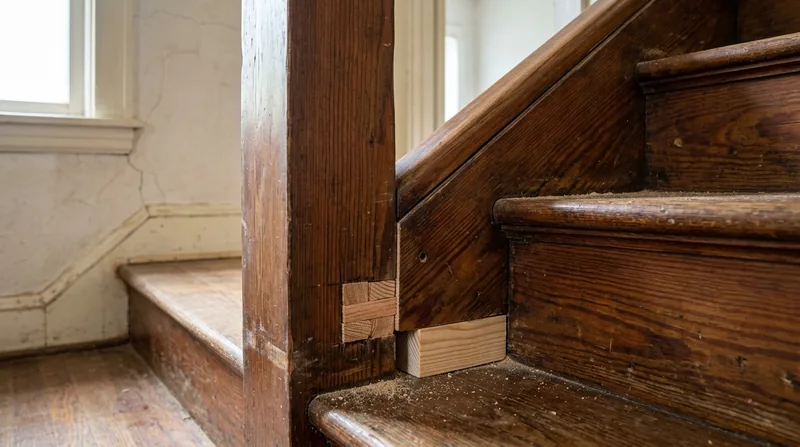




Stair & Railing Repair in Greensboro means fixing squeaky treads, loose balusters, worn stringers, and failing railings on the century-old staircases that anchor homes across Fisher Park, Old Irving Park, and the Aycock and Glenwood historic districts. The Piedmont's humid subtropical climate, winter ice storms, and the natural movement of heart-pine flooring over more than a century create real wear on the structural components that hold a staircase together. A loose tread or wobbly bannister is not cosmetic, it signals that fasteners have failed or wood has shifted, and left unaddressed it becomes a safety issue and a more expensive repair. We repair and rebuild treads, stringers, and railings, restore period details where they survive, and install code-compliant handrails and attic ladders that work with the home's original architecture. This page covers what makes stairs fail in Greensboro, how we approach repair versus replacement, what the work costs, and what to expect when you call.
Why Stair & Railing Repair Matters in Greensboro's Historic Homes
The bungalows, Colonial Revival houses, and Craftsman cottages built in Greensboro between 1900 and 1930 were constructed with hand-planed heart-pine stringers, solid hardwood treads, and newel posts and balusters milled from long-grain timber that was meant to last. Over a century, wood moves with seasonal humidity swings, fasteners loosen, and treads develop cupping or checking. The Piedmont's summer thunderstorms and winter ice bring moisture and freeze-thaw cycles that accelerate decay at the base of newel posts and in the sill area where stairs meet the floor. A staircase that squeaks, has loose railings, or shows movement underfoot needs attention because it affects how safely the house functions and because small repairs made now prevent larger structural failures later.
- We tighten loose fasteners, shim treads, and repair or replace individual stringers without dismantling the entire staircase.
- We restore original period railings, balusters, and newel posts where the wood is sound and repair is possible.
- We install new code-compliant handrails that meet current building safety standards while respecting the home's character.
- We address moisture and decay at the base of stairs and landing areas to prevent future damage to the stringer and sill.
These repairs keep your staircase safe, preserve the architectural detail of your home, and cost far less than full replacement.
Local example: A 1925 Craftsman bungalow in the Fisher Park historic district had a squeaky third tread and a wobbly bannister on the main staircase. The newel post had shifted slightly, and two fasteners had corroded. We tightened the connections, shimmed the tread, replaced the fasteners with stainless steel, and the staircase is now quiet and solid. Total cost was under $800, and the original heart-pine and oak details remain intact.
For more on wood repair in Greensboro's older homes, see our wood rot repair service page, which covers decay in stringers and support beams.
How We Repair and Rebuild Staircases in Greensboro
Every staircase repair begins with a careful inspection to identify which components are failing and why. We examine the stringers for rot, check fastener integrity, assess tread wear and movement, and evaluate the railing system. Some repairs are straightforward fastener work or selective wood replacement. Others require partial or full stringer rebuilding, tread replacement, or railing restoration. We do not automatically replace what can be repaired, and we explain the difference between a repair that will serve the house well and a replacement that is the only honest answer.
- We inspect the stringer, treads, risers, balusters, newel post, and fastener condition to determine the scope of work.
- We tighten or replace corroded fasteners, shim loose treads, and add blocking or reinforcement where the wood is sound.
- We repair or replace individual treads, stringers, or balusters rather than remove and rebuild the entire staircase whenever possible.
- We restore or match period railings, newel posts, and balusters in wood species and profile to preserve the home's original character.
- We install new handrails, balusters, or attic ladders to meet current building codes without compromising the home's design.
The work is done on-site, and we coordinate with you to minimize disruption to your home.
Greensboro example: A 1950s ranch home in Sunset Hills had a basement staircase with a cracked stringer and a loose bottom tread. Rather than replace the entire staircase, we sistered a new stringer alongside the existing one, replaced the damaged tread, and secured the connection to the floor framing. The repair cost $1,200 and took two days. The staircase is now safe and structurally sound, and the original wood remains in place.
For related structural carpentry work, visit our framing and structural carpentry page.
Stair & Railing Repair Methods and Approaches
| Approach | Description | Best for |
|---|---|---|
| Fastener repair and tightening | Tighten loose bolts, replace corroded fasteners with stainless steel hardware, add shims and blocking to stabilize treads and railings. | Squeaky treads, wobbly railings, loose balusters, and minor movement caused by fastener failure. |
| Individual tread replacement | Remove and replace a single tread while keeping the stringers and railing system in place. Match wood species and profile to the existing staircase. | Cracked, cupped, or worn treads on sound stringers. Preserves the original staircase structure. |
| Stringer repair and sistering | Repair rot or damage in a stringer by sistering a new stringer alongside it, or by replacing the damaged section and splicing in new wood. Secure to the floor framing and landings. | Cracked, rotted, or sagging stringers that support the tread system. Maintains the original staircase footprint. |
| Railing restoration and replacement | Repair or restore original balusters, newel posts, and handrails. Replace damaged sections or install new code-compliant railings that match the home's period style. | Loose, cracked, or missing balusters; deteriorated newel posts; failing railings; code compliance upgrades. |
| Full staircase rebuild | Remove and rebuild the entire staircase, including stringers, treads, risers, and railings, when structural damage or rot makes repair impractical. | Extensive rot, severe structural damage, or when the cost of piecemeal repair approaches the cost of replacement. |
Stair & Railing Repair Cost in Greensboro: What to Expect
The cost of stair and railing repair in Greensboro depends on the scope of damage, the number of components that need work, and whether you are repairing or replacing. A simple fastener tightening and minor shimming on a squeaky staircase may cost $600 to $900. Replacing a single tread or repairing a localized stringer defect typically runs $1,000 to $2,500. Full stringer repair using sistering techniques or extensive railing restoration can range from $2,500 to $5,000 or more. A complete staircase rebuild is priced on estimate because the scope and materials vary widely.
Factors that affect the final cost include the extent of rot or structural damage, the wood species and profile you need to match, whether the staircase is interior or exterior, access and safety considerations, and the complexity of any period restoration work. Getting two or three estimates gives you a clear picture of what the work entails and how different contractors approach the problem.
For detailed pricing across all our carpentry services, see our full pricing page. Call us at (336) 203-7049 for a free, no-obligation estimate.
Stair & Railing Repair Near Me: What Greensboro Homeowners Should Know When Hiring
When you are looking for a carpenter to repair or rebuild a staircase, focus on experience with your home's age and style, honest assessment of repair versus replacement, and a clear understanding of what permits or building code compliance may apply. Ask whether the contractor has worked on similar staircases in Greensboro's historic districts or in homes of your era. Request references and ask to see photos of completed work. Understand that certain stair alterations, especially those affecting structural support or load paths, may require a building permit from the Greensboro Building Inspection Department, and reputable contractors will tell you upfront if a permit is needed.
- Verify that the contractor is fully insured and can provide proof of general liability coverage for the work.
- Get multiple estimates and compare the scope of work, materials, and timeline described in each one.
- Ask whether the estimate is free and no-obligation, and confirm the response time for a site visit.
- Request references from recent jobs in Greensboro or surrounding areas, and follow up with at least two.
- Clarify whether the contractor will pull permits if required, and who is responsible for coordinating with the building department.
- Ask how the contractor handles disruption to your home during the work, and whether you can access other parts of the house normally.
The right contractor listens to your concerns, explains the work in clear language, and delivers what was promised on time and on budget.
Ready to move forward? Contact us for a free estimate. We respond within 24 hours and can usually schedule a site visit within a few days.
Stair & Railing Repair in Greensboro: Pricing Guide
| Service | Price | Details |
|---|---|---|
| Fastener repair and tightening | Starting at $600 | Tighten loose connections, replace corroded fasteners, add shims. Simple jobs may cost less; complex access increases price. |
| Single tread replacement | Starting at $1,000 | Remove and replace one tread while stringers remain in place. Wood species matching and custom milling affect final cost. |
| Stringer repair or sistering | Starting at $1,500 | Repair rot or damage by sistering new wood or replacing a section of the stringer. Extent of decay and structural complexity determine price. |
| Railing restoration or replacement | Starting at $1,200 | Repair balusters, newel posts, or handrails; install new code-compliant railings. Period matching and custom milling add to cost. |
| Full staircase rebuild | On estimate | Complete removal and reconstruction of stringers, treads, risers, and railings. Requires site visit to assess scope and materials. |
| Estimate and travel | Free | No charge for site visit or estimate. Included in Greensboro and surrounding service areas. Response within 24 hours. |
Indicative pricing, the exact cost depends on square footage, finish, and site access. Free personalized estimate within 24h at (336) 203-7049.


