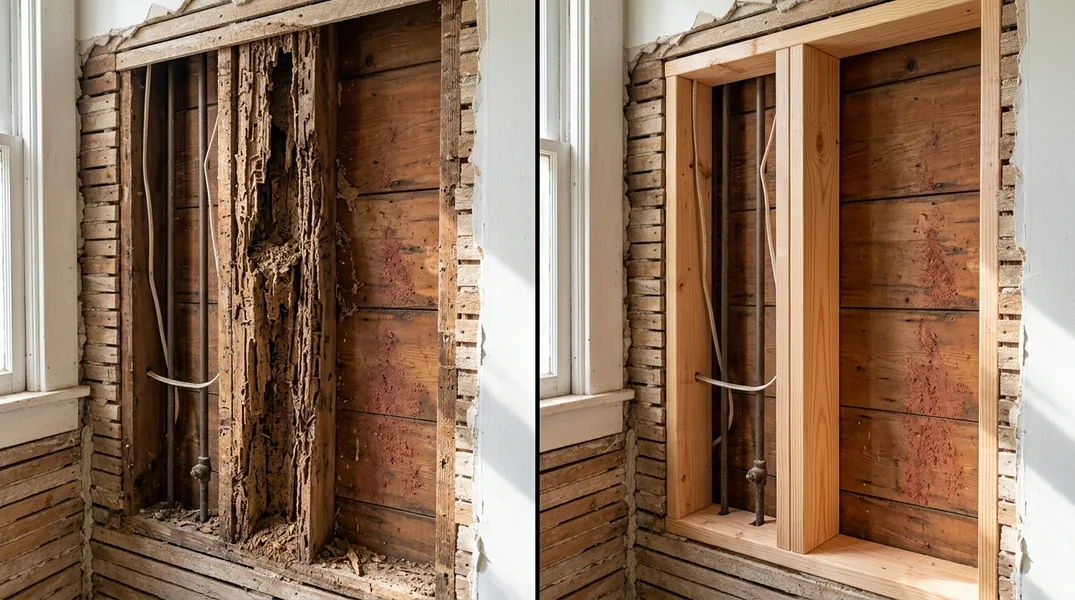
Dry Rot vs Termite Damage: Why the Difference Matters
If you own a bungalow in Greensboro, the sight of soft, crumbling wood is never welcome. But before you panic or call in the professionals, it helps to understand what you're dealing with. Dry rot and termite damage look similar at first glance, yet they require completely different repair approaches. Misdiagnosing the problem could mean wasting money on the wrong treatment, or worse, leaving the real culprit to cause more damage.
The stakes are high because both conditions threaten the structural integrity of your home. A floor that feels spongy underfoot, wood trim that crumbles when you press it, or visible tunnels in your foundation could signal either pest activity or fungal decay. Understanding the distinction between dry rot vs termite damage is the first step toward protecting your investment and ensuring your family lives in a safe, sound home.
What Does Wood Rot Look Like? Signs of Dry Rot
Dry rot is a fungal disease that breaks down wood from the inside out. Despite its name, dry rot actually requires moisture to thrive, though the affected wood may feel dry and brittle to the touch. When you're inspecting your Greensboro home, look for wood that has turned a dark brown or reddish color and has begun to shrink and crack in a distinctive cubic pattern (imagine a checkerboard of deep fissures). The surface may feel powdery or crumbly when you press on it.
Dry rot typically develops in areas with poor ventilation and moisture problems: crawl spaces, basements, around plumbing leaks, or under damaged roofing. You might notice a musty, earthy smell, which is the fungal spores at work. Unlike termite damage, dry rot doesn't create visible tunnels or mud tubes. Instead, the decay spreads through the wood in a more diffuse pattern, and you may see thread-like fungal strands (called mycelium) on the wood surface or nearby soil. If left untreated, dry rot can spread rapidly through a home, making early detection crucial.
Signs of Termite Damage in Wood: What to Look For
Termite damage presents a distinctly different picture. Subterranean termites, the most common species in North Carolina, leave behind hollow galleries inside the wood as they tunnel and feed. When you tap on infested wood, it may sound hollow, even if the surface appears intact. The wood often retains its original color or may appear slightly discolored along damage lines. Rather than crumbling into powder, termite-damaged wood tends to have a harder, more structured appearance on the outside while being hollowed out within.
One of the most telltale signs of termite activity is the presence of mud tubes. Termites build these pencil-thin tubes from soil, saliva, and feces along foundation walls, basement columns, and crawl space joists. These tubes serve as protected highways, allowing termites to travel between their underground colonies and the wood above. You might also notice discarded termite wings near windowsills or entry points, especially during spring swarming season. In some cases, you'll hear faint clicking or rustling sounds coming from inside the walls, though this is less common. The damage pattern is often more linear and follows the grain of the wood, whereas dry rot spreads more randomly.
Wood Rot vs Termite Damage: Key Differences at a Glance
To help you narrow down what's affecting your home, here are the most important distinguishing features. Dry rot produces a dark brown, cubically cracked appearance with a powdery texture, while termite damage typically appears as clean tunnels or galleries inside wood that may look normal on the surface. Dry rot requires moisture and poor air circulation, so it's found in damp, enclosed spaces. Termites can infest wood almost anywhere, though they need ground contact or moisture to survive long-term. Dry rot spreads through fungal spores and mycelium threads in the air and soil. Termites spread by establishing colonies and sending foragers to new food sources.
The smell is another clue: dry rot smells musty and fungal, while termite-infested areas may have little odor or a faint, slightly sweet smell. Dry rot damage is irreversible and requires removal of the affected wood and repair of moisture sources. Termite damage also requires wood replacement, but the primary focus is eliminating the termite colony to prevent reinfestation. If you're uncertain which you're facing, contact Greensboro Carpentry for a free estimate. Our experienced carpenters can identify the source of your wood damage and recommend the right repair strategy.
When to Call a Professional for Wood Rot & Dry Rot Repair or Termite Damage Repair
Even if you think you've identified the problem correctly, professional assessment is always worth the investment. Damage that appears minor on the surface might be extensive behind walls or under floors. A carpenter can probe the wood, check moisture levels, and determine the full scope of deterioration. If dry rot is the culprit, you'll need to address the underlying moisture problem (fixing leaks, improving ventilation, installing a sump pump) before any repair work begins. If termites are responsible, you'll likely need to coordinate with a pest control specialist to eliminate the colony while the carpenter handles structural repairs.
Floor Joist & Subfloor Repair and Beam Replacement & Load-Bearing Wall Removal are common repairs that follow either diagnosis. The cost and timeline will depend on the extent of damage and the structural elements involved. At Greensboro Carpentry, we've handled countless wood damage cases throughout Greensboro, and we know how to restore your home safely and thoroughly. Call us at (336) 203-7049 to discuss your situation, or visit our website to learn more about our repair services.
Preventing Future Damage: Maintenance Tips for Greensboro Homeowners
Once you've addressed the immediate damage, prevention becomes your best defense. For dry rot, the key is moisture management. Ensure gutters and downspouts direct water away from your foundation, repair roof leaks promptly, and maintain proper grading around your home. Improve ventilation in crawl spaces and basements by installing vents or a dehumidifier. Inspect wood regularly for soft spots or discoloration, especially in areas prone to dampness. Treat any wood that will be in contact with soil or concrete with a wood preservative or use naturally rot-resistant materials like pressure-treated lumber.
To prevent termite infestation, eliminate wood-to-soil contact by keeping wooden posts, siding, and deck supports elevated on concrete piers. Remove dead wood, mulch, and leaf litter from around your home's perimeter. Have your foundation and crawl space inspected annually, particularly if you live in an older home. Maintain your gutters and ensure proper drainage so the soil around your foundation stays dry. Consider having a pest control professional apply a termite barrier treatment to your foundation. Regular inspections and maintenance are far less expensive than dealing with advanced wood damage, so don't wait until you notice a problem to take action.
Looking for a professional carpentry contractor in Greensboro? Greensboro Carpentry responds fast for all your carpentry needs.
Get a Free QuoteOur services: Wood Rot & Dry Rot Repair · Termite Damage Repair · Floor Joist & Subfloor Repair